
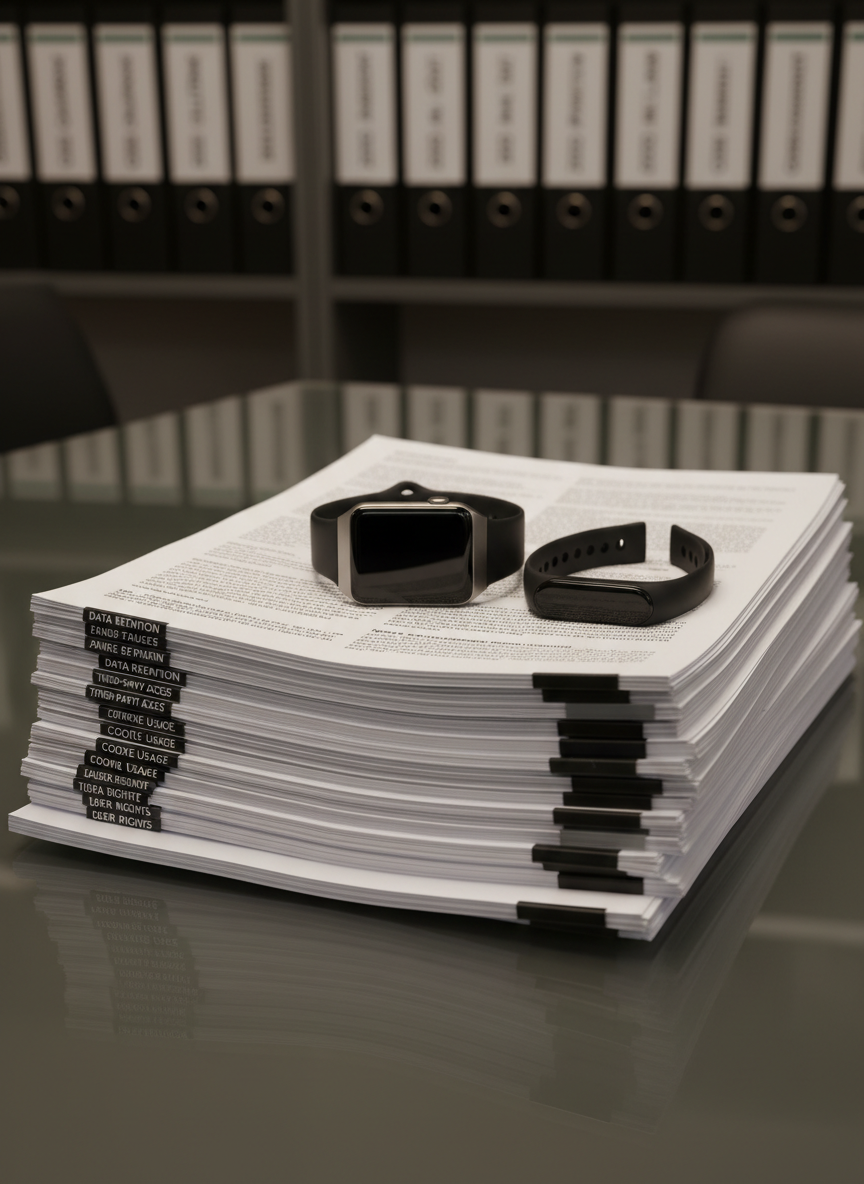
A modern, glass-topped office table holding a neatly stacked pile of printed privacy policies, each page densely filled with fine legal text and bold section headings like “Data Retention” and “Third-Party Access.” On top of the stack sits a powered-off, brushed-aluminum smartwatch and a slim, matte-finished fitness band, their screens black and reflective. In the background, softly blurred shelves hold neatly organized binders labeled with years and compliance terms. Warm yet subdued overhead lighting casts gentle reflections in the glass tabletop and faint shadows from the paperwork. Photographed at a slightly low, side angle with moderate depth of field, the scene feels professional, serious, and documentary in style, evoking corporate responsibility and the weight of informed consent surrounding wearable data.

Risks

Explore how biometric data is collected, shared, and misused, with clear examples and guidance for informed consent and safer wearable use.

Legal Risks

This is a complex legal area because most laws were written for phones and “hidden” cameras, not AI-powered glasses and other wearables.

Photo by Sora Shimazaki on Pexels.com

Biometric Basics

This section offers quick facts, definitions, and FAQs about biometric data, consent, and third-party tracking for non-experts.
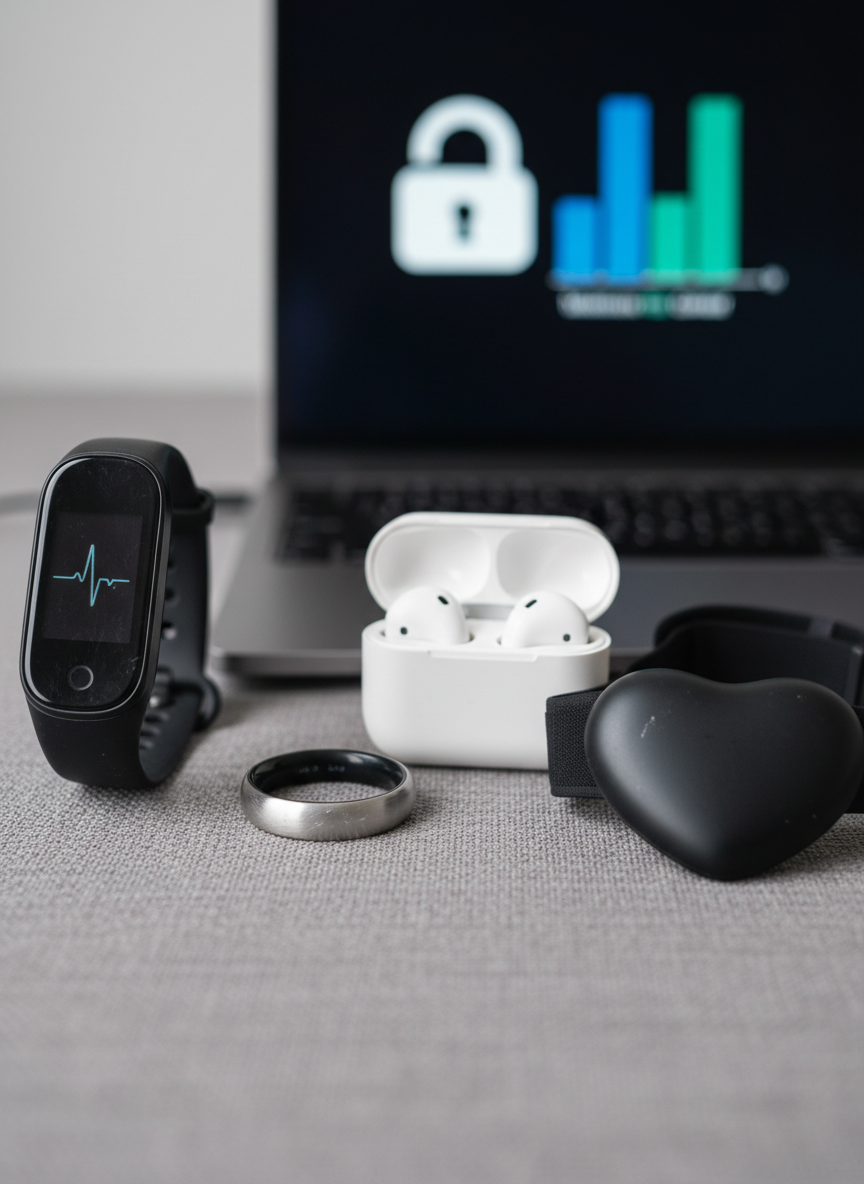
An array of consumer wearables carefully arranged on a neutral grey fabric surface: a glossy fitness tracker, a metallic smart ring, wireless earbuds in an open case, and a smooth plastic heart-rate chest strap. Each device shows subtle scuffs and fingerprints, emphasizing real-world use. Behind them, a softly blurred laptop screen displays an abstracted bar chart and padlock icon, just out of legible focus. Soft studio lighting from above and slightly to the left creates crisp, professional highlights and controlled shadows, accentuating each device’s materials and contours. Captured from a slightly elevated three-quarter angle with balanced composition, the image feels modern, analytical, and photographic, conveying both the appeal and the underlying risks of biometric data collection in a clean, corporate visual language.

ethical risks

We expose how wearables capture sensitive biometrics without meaningful consent, highlight real-world risks, and direct readers to the Risks page for evidence and safeguards.

Photo by Pixabay on Pexels.com

Privacy Risks

This section reveals the way your data and information are used by corporations and governments.

An array of consumer wearables carefully arranged on a neutral grey fabric surface: a glossy fitness tracker, a metallic smart ring, wireless earbuds in an open case, and a smooth plastic heart-rate chest strap. Each device shows subtle scuffs and fingerprints, emphasizing real-world use. Behind them, a softly blurred laptop screen displays an abstracted bar chart and padlock icon, just out of legible focus. Soft studio lighting from above and slightly to the left creates crisp, professional highlights and controlled shadows, accentuating each device’s materials and contours. Captured from a slightly elevated three-quarter angle with balanced composition, the image feels modern, analytical, and photographic, conveying both the appeal and the underlying risks of biometric data collection in a clean, corporate visual language.
Is this your new site? Log in to activate admin features and dismiss this message
Log In